The name alone is interesting. Tiamat comes from old Mesopotamian mythology — a primordial sea goddess tied to chaos and the ocean deep. Whoever named this game knew what they were doing. The whole thing has this dark, suffocating underwater atmosphere that fits perfectly.
Tiamat Sonar Warfare is a tactical submarine game for Android. You're the commander. You navigate through hostile waters, hunting enemy vessels using sonar while trying not to get hunted yourself. The twist — and it's a big one — is that the game actually models how sonar works rather than just making it a glorified radar ping.
Most mobile naval games skip all the hard stuff. They give you a map, mark enemies in red, and let you shoot. Tiamat doesn't do any of that. Enemies don't have health bars floating above them. You don't get arrow indicators pointing at threats. You get raw signal data on a spectrogram and a whole lot of silence. Figuring out what that data means, where the enemy actually is, and whether they've spotted you yet — that's the game.
It's not for everyone. I'll say that now and say it again later. But for players who like military sims, submarine stuff, or just games that treat them like adults who can figure things out — this is genuinely something special.
🎮 How Does It Work? — Let Me Walk You Through an Actual Session
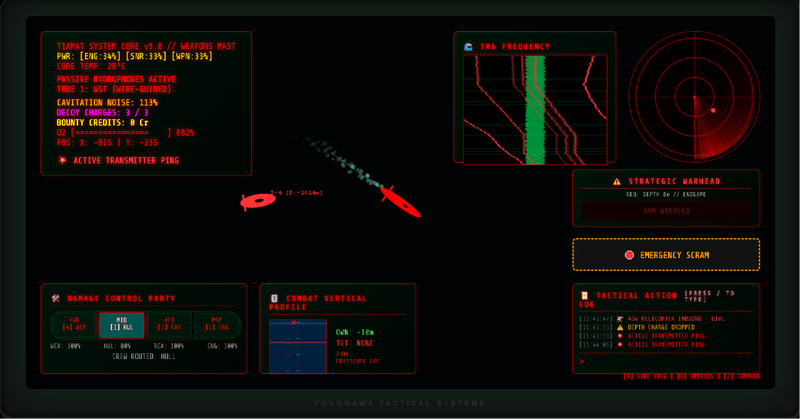
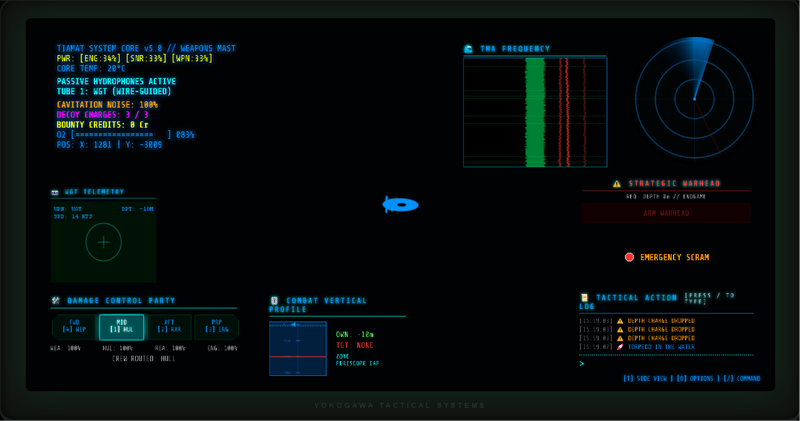
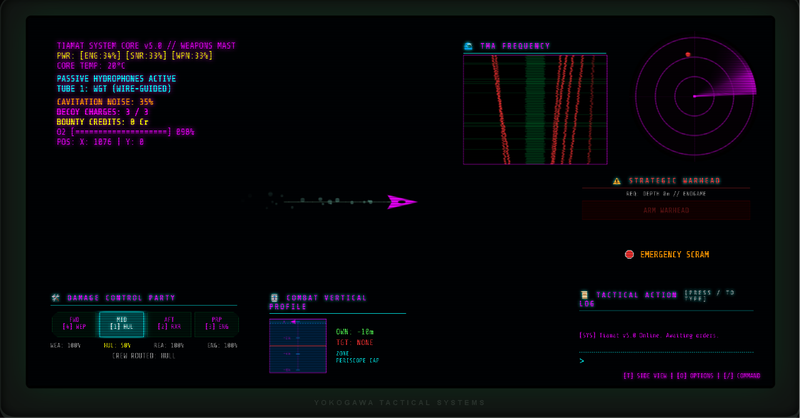
The first time I opened Tiamat Sonar Warfare, I was confused for a solid ten minutes. That's not a knock — it's just the truth. The interface looks like something out of a real military installation. CRT-style screens, scanlines, static glitches, beeping sonar pulses. There's nothing cute about it. No cartoonish menus or friendly tutorial mascots. Just a terminal and the ocean.
Here's the basic loop: you're running your submarine through an underwater environment, and your job is to find enemies before they find you.
You have two tools for detection. Active sonar fires out a pulse that bounces off objects nearby and returns a clear picture of what's around you. Fast and accurate. The problem is it also tells everyone in the area exactly where you are.
Passive sonar, on the other hand, just listens. No pulses, no giveaway signals — it picks up acoustic signatures from enemy engines, props, and movement. You stay invisible, but the data takes longer to make sense of and is never quite complete.
The passive sonar feeds into something called the Waterfall Spectrogram. This is a live display that shows frequency signatures over time as a cascading visual. Different vessels have different acoustic fingerprints — a surface destroyer running full speed sounds different from an attack submarine going slow and quiet.
Learning to read those signatures, and then using that data to figure out the enemy's bearing and rough distance, is called TMA — Target Motion Analysis. It's the core skill of the game and honestly one of the most satisfying things I've learned in any mobile game.
Depth matters too. There are thermoclines — natural temperature layers in the ocean — that affect how well sonar travels through water. Get below one and surface ships have a much harder time detecting you.
Useful when you're being hunted. The ocean floor, though, is a real threat. At 5,000 meters the terrain gets jagged and fractal-shaped, and if you scrape the bottom at any real speed, your hull tears open and you alert every enemy in the sector at once. Found that out the hard way.
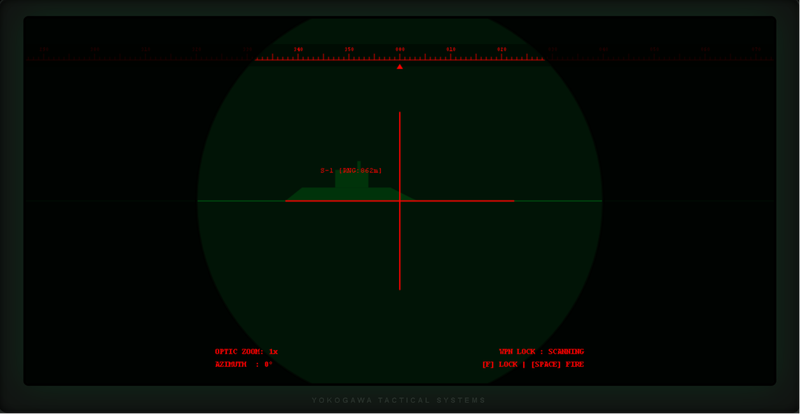
Combat happens through wire-guided torpedoes. You rise to periscope depth, lock silhouettes through the crosshairs, feed targeting data to the computer, and fire. There's live telemetry as the torpedo travels. Miss, and now you've made noise and the enemy knows something's out there. Hit, and it's one of the most satisfying payoffs I've had on mobile in a while.
The nuclear reactor adds another layer. Push it hard and you move faster, but you generate heat and noise — both things the enemy can pick up. There's an Emergency Scram that instantly kills all your systems and drops your acoustic signature to zero, but when you reboot, there's a massive noise spike. So it's not a panic button. It's a calculated move that you need to plan around.
Missions cover a decent range — recon, escort, base destruction, survival scenarios. There's a campaign that scales difficulty in a way that feels fair, at least for a while.
✨ Key Features Of Tiamat Sonar Warfare APK — The Ones Worth Knowing About
🖥️ A UI That Actually Feels Like Military Hardware
The CRT terminal interface isn't just aesthetic. It shapes how you experience every moment of the game. Every beep, every scanline shift, every static flicker pulls you further into the idea that you're actually operating a sonar suite rather than tapping around a phone screen. It's committed to the bit in a way that genuinely works.
📡 Active and Passive Sonar — Both Have Real Trade-offs
This isn't a case of "active sonar is better but costs more points." Active gives you clear, fast information and broadcasts your location. Passive keeps you hidden but gives you incomplete data that takes interpretation. Knowing which to use, and when to switch, is something you learn through getting burned — not through a tooltip.
📊 Waterfall Spectrogram and TMA
The spectrogram is where Tiamat earns its credibility as a simulation. You're reading real frequency data, distinguishing contact types by their acoustic signatures, and doing actual triangulation math to figure out where something is. No handholding. It's the thing that makes victories feel deserved.
🗺️ Two Tactical Views That Serve Different Purposes
The Top-Down Tactical Map gives you the big picture — where you are, where you think the enemy is, what routes make sense. The Side-Profile Sonar Cross-Section shows you depth, thermoclines, and terrain. You need both constantly, and switching between them mid-engagement becomes second nature after a few hours.
🎯 Periscope Targeting With Wire-Guided Torpedoes
Rising to periscope depth to visually ID a target, lock it through the crosshairs, and watch your torpedo's live telemetry as it tracks toward the hit — it's a clean, tense sequence that never really gets old. The Picture-in-Picture feed while the torpedo is in the water is a nice touch.
🌊 The Ocean Floor Is Trying to Kill You
The underwater terrain isn't scenery. Hills, ridges, deep trenches below 5,000 meters — they're physical hazards with real consequences. Scrape the bottom wrong and your hull breaches, you make noise, and suddenly every enemy contact in the area knows something happened. The terrain becomes a tactical factor, not a backdrop.
⚛️ Nuclear Reactor Management Under Pressure
Heat and noise outputs from your reactor are something you actively manage throughout every mission. Go fast and you're loud. Run quiet and you lose speed. The Emergency Scram mechanic adds a high-stakes decision point that forces you to think before you act, not after.
🔋 Power Routing Across Three Modes
Route power to Sensors Max and your sonar range extends, lock-on is faster. Weapons Max speeds up torpedo reload. Balanced splits it evenly. Simple system on paper — but knowing which mode to run in a specific situation changes outcomes.
🚁 Multiple Enemy Types That Require Different Approaches
ASW helicopters hunting you with depth charges feel different from tracking a quiet submarine contact on passive sonar. The variety keeps you from settling into one fixed approach and forces genuine adaptability.
📈 Real Progression Through the Shipyard
Upgrades in the Dry Dock — sensor range, weapons systems, detection capabilities — feel meaningful because the underlying mechanics are meaningful. Better sensors actually let you do things you couldn't before, not just push a number higher.
💡 Benefits of Using Tiamat Sonar Warfare APK
The obvious one is that it's just more interesting than most mobile games in this category. That's not a small thing. A lot of strategy games for Android fall into the same loop — build, wait, attack, repeat.
Tiamat actually requires you to think, adapt, and learn specific skills. After a couple of sessions you're genuinely better at reading a spectrogram than you were before, and that progression feels real.
There's also something worth mentioning about the tension the game builds. It's not jump-scare tension or action-reflex tension. It's slow, quiet, and psychological. You're sitting below a thermocline, listening to passive sonar, watching a contact signature on the spectrogram get closer, not sure if they've detected you yet. That's a feeling most mobile games don't even attempt. Tiamat pulls it off consistently.
Playing offline is a genuine benefit too. No internet dependency means you can run a full campaign mission on a flight, in a dead zone, wherever — without worrying about connection drops killing a 45-minute engagement mid-mission.
The file size is fair for what you're getting. 113 MB is smaller than a lot of games that deliver far less. And it runs fine on mid-range Android hardware — no need for a flagship device.
🛠️ Tips to Get the Most Out of Tiamat Sonar Warfare APK
🔇 Default to Passive Sonar — Only Go Active When You Have To
New players fire active sonar constantly because it gives immediate, clear results. Resist this. The moment you ping, every enemy in range knows your approximate position. Passive should be your default mode. Active is for confirming a shot solution, not general awareness.
📐 Spend Your First Few Sessions Just Reading the Spectrogram
Don't try to kill anything until you can recognize a few different acoustic signatures. Spend early missions tracking contacts and identifying what you're hearing before you engage. It's boring advice but it's the one that actually prevents the frustration of dying repeatedly without understanding why.
🌡️ Thermoclines Are Your Best Friend When Being Hunted
When surface ASW units are on you, get below the nearest thermocline layer. Surface sonar loses significant effectiveness across temperature boundaries. This single technique will save your run more often than any combat skill.
⚡ Watch Your Reactor Before You Reposition
Before you make any significant speed change, check reactor heat. Running hot means running loud. Loud means detectable. A lot of deaths in this game happen because someone pushed speed to reposition and didn't notice the noise output climbing.
🎯 Get in and Out at Periscope Depth Fast
Every second you spend at periscope depth is exposure. Know what you're looking for before you rise. Lock the target, fire, and go back down. Don't linger. Helicopters in particular respond fast to periscope activity.
🏗️ Upgrade Sensors First, Weapons Second
It's tempting to rush torpedo reload speed upgrades because combat feels satisfying. But better sensors mean more lead time, better intelligence, and fewer situations where you're reacting to a threat instead of planning around it. Sensor upgrades pay off longer.
🔕 Use Emergency Scram Proactively, Not Desperately
The Scram reboot creates a massive acoustic spike. If you wait until you're already detected to use it, the spike just confirms your position. Learn to Scram before detection — use it to disappear while still invisible, and have a drift direction planned so you're moving away from the threat while silent.
📥 How to Download and Install Tiamat Sonar Warfare APK — Step by Step
APKview.com is the recommended source here. It's clean, maintains version accuracy, and doesn't bundle garbage into the download. Here's how to get it running:
Step 1 — Enable Unknown Sources. Go to your Android Settings, tap Security or Privacy (varies by device), and turn on "Install from Unknown Sources" or "Allow installs from this source." This is required for any APK outside the Play Store.
Step 2 — Open your browser and go to APKview.com. Search for "Tiamat Sonar Warfare APK" in the site's search bar.
Step 3 — Verify the listing before downloading. You're looking for v5.0, the 113 MB file size, and a recent update date. If something looks off — wrong version, file size doesn't match — don't download it.
Step 4 — Tap the download button and let it finish completely. Don't kill the download early.
Step 5 — Open your file manager, find the downloaded APK in your Downloads folder, and tap it.
Step 6 — When the install prompt appears, tap Install. Takes under a minute usually.
Step 7 — Once it opens, don't skip the tutorial. I know that sounds obvious but this is one of those games where the tutorial actually explains things you'll need. Watch it.
Step 8 — Before your first real mission, go into Settings and adjust HUD size if you're on a smaller screen. The Spectrogram in particular is much easier to read if you bump the display settings up.
🔒 Is It Safe to Use? Here's the Honest Take
This question matters more with APK downloads than most things, so let me be straight.
The game itself is from a real developer. Syntaxv4 put it on itch.io, which is a legitimate indie game platform — not some anonymous upload. There's an actual version history and a real creator identity behind it. That's a good sign.
The risk with APKs is almost never the original game — it's repackaged versions from sketchy sites that add malware into the file. That's why source matters. APKview.com does file integrity checks and doesn't bundle third-party software, which is why it's the recommended option here.
If you want extra peace of mind, take the downloaded file and run it through VirusTotal (virustotal.com) before installing. Upload the APK, let it run against 70+ antivirus engines, and look at the results. A clean file from a source like APKview will show up clean. Takes two minutes and removes any remaining doubt.
Check permissions when you install too. A submarine game has no legitimate reason to access your contacts, read your SMS, or track your location. Tiamat doesn't ask for any of that. If a version you downloaded does — delete it immediately.
After you've installed it, you can go back into Settings and turn off "Unknown Sources" again. No reason to leave that open permanently.
📱 What Device Do You Need? — Quick Compatibility Check
Tiamat Sonar Warfare v5.0 works on Android 6.0 and up. For comfortable performance, 2 GB RAM is the floor — 3 GB or more is better if you want things running smoothly when multiple contacts are active on screen at once.
The visual design is actually light on GPU demand. Vector graphics and CRT styling don't push hardware the way modern 3D games do, so mid-range phones from the last three or four years handle it without issue.
Screen size matters more than specs. The Waterfall Spectrogram and tactical maps have a lot of detail. On anything smaller than 6 inches, it gets cramped — bump up the HUD scale in settings to compensate. On a 6.5-inch or larger screen, the whole interface feels genuinely impressive.
Storage isn't a concern at 113 MB. Most phones have space.
⚖️ Pros and Cons — The Unfiltered Take
✅ Pros:
- Actual submarine warfare mechanics — sonar, TMA, thermoclines, reactor management — on a phone
- The Waterfall Spectrogram system is genuinely unique in mobile gaming
- CRT terminal UI is atmospheric and committed — not a gimmick
- Building tension through patience and information rather than just enemy waves
- Multiple mission types that test different skills
- Ocean floor physics as a real hazard, not decoration
- Runs fine on mid-range Android, 113 MB is a reasonable ask
- Fully offline — campaigns work without internet
- Progression upgrades that actually change what you can do
- Legitimate indie dev with a traceable release history on itch.io
❌ Cons:
- Learning curve is real and steep — casual players will bounce off early
- Not on the Play Store, you have to sideload it
- The CRT interface can be genuinely hard to read on small screens
- Slow opening hours while the campaign teaches mechanics
- The Emergency Scram reboot spike will kill you multiple times before you understand the timing
- Not a great game if you just want something to pick up and play for five minutes
🏁 Final Verdict — Is Tiamat Sonar Warfare APK Worth Downloading?
Honestly? Yes. But I want to be real about who it's for.
If you're looking for something fast, casual, and easy to drop in and out of — this probably isn't it. The game is slow by design. The satisfaction builds over time and through learning, not through quick hits. Some sessions you'll spend 30 minutes tracking a contact before you even take a shot. That's not a bug. That's the whole point.
But if that sounds even remotely appealing to you — if you've ever watched a submarine movie and thought the hunting-and-hiding stuff was the most interesting part, or if you're just tired of mobile strategy games treating you like you can't handle real mechanics — Tiamat Sonar Warfare is worth your time.
The moment it clicks is something I keep coming back to. You pick up a passive sonar contact on the spectrogram, work the TMA data, position yourself below a thermocline so the surface ships can't hear you, rise to periscope depth for a three-second lock, send the torpedoes, and drop back into the deep before the enemy knows what happened. That sequence, done clean, is one of the best feelings I've had in a mobile game.
Download it from APKview.com, scan it through VirusTotal if you want to be safe, and go through the tutorial even if you think you don't need it. Give it two or three sessions before you judge it. The game earns your patience.
113 MB, free to download. The only real cost is the willingness to figure something out. For players who actually want that — absolutely worth it.